
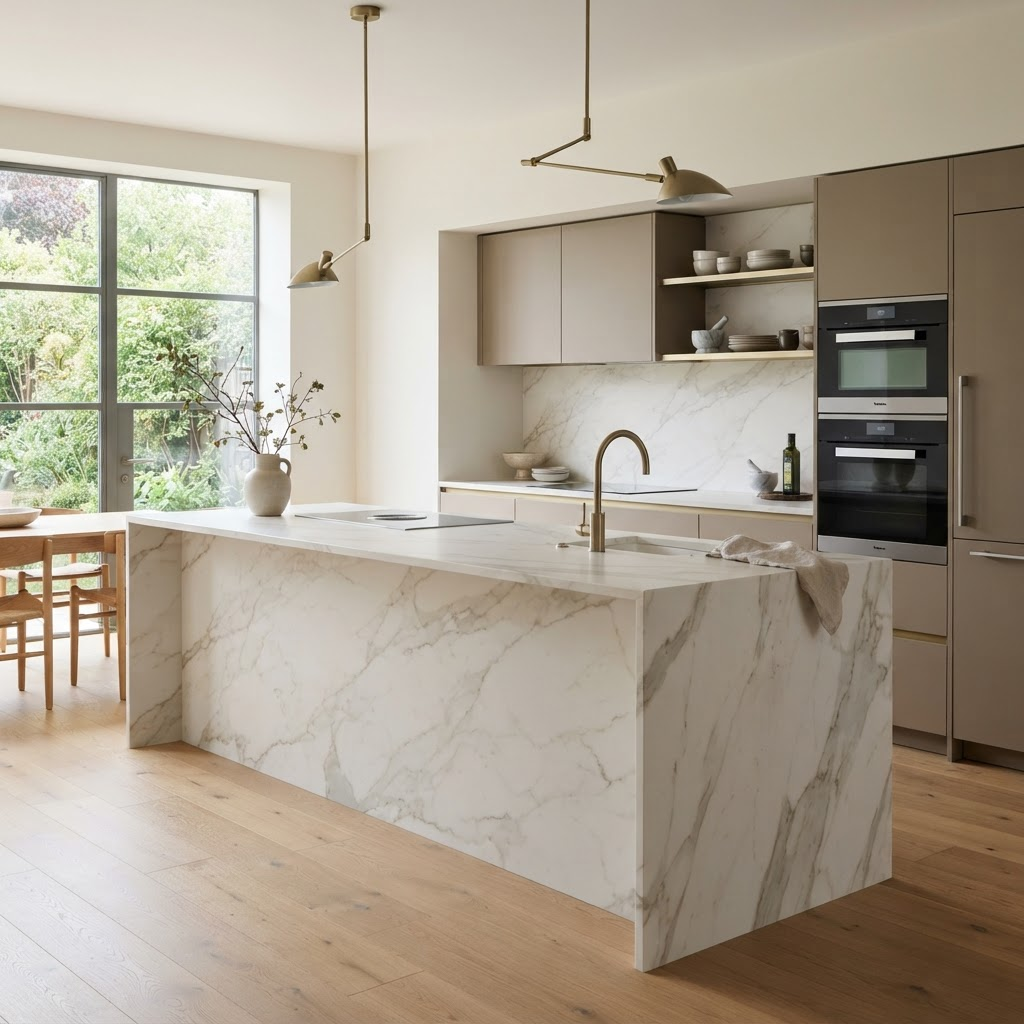
The kitchen is the most functional space in the home and, at the same time, the one where the quality of a material shows most clearly. Large-format porcelain reconciles two things that used to be mutually exclusive: the look of real marble and the resilience that daily cooking demands.
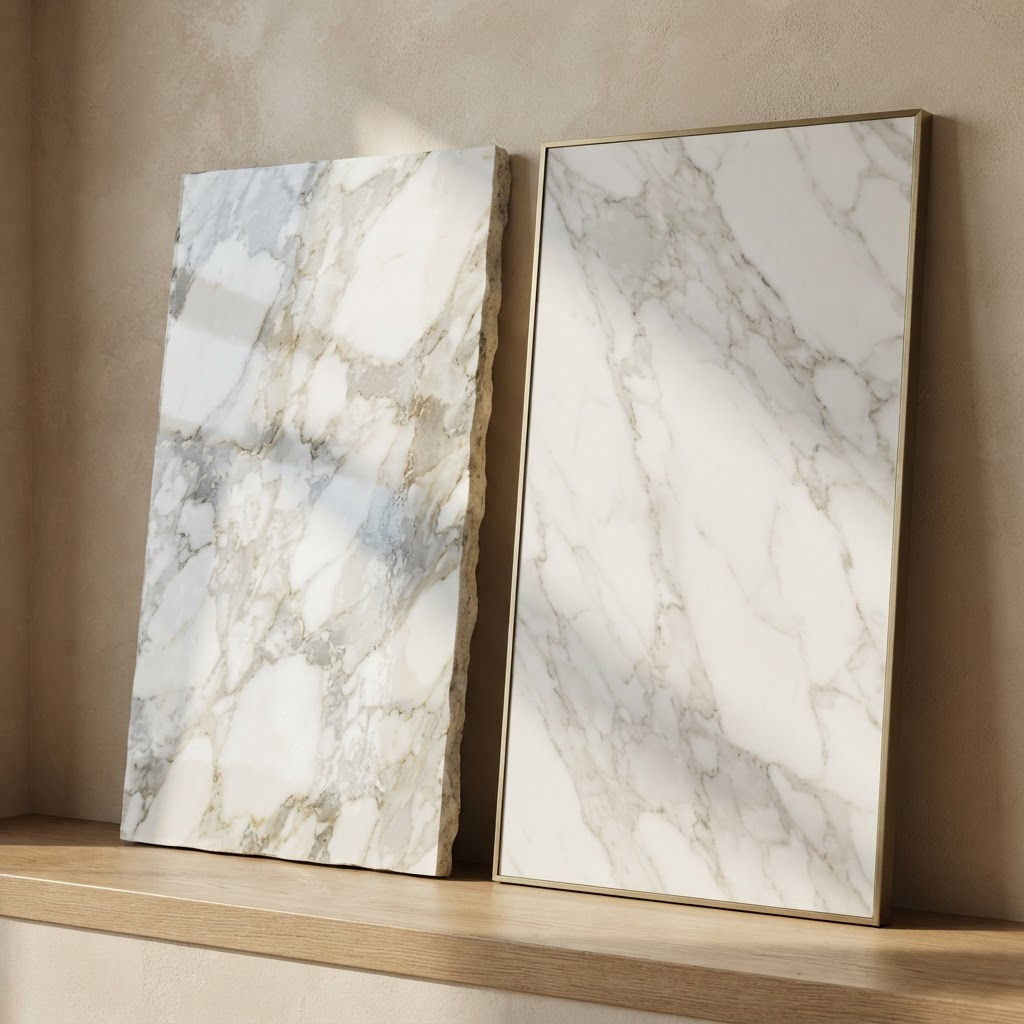
Natural marble on a kitchen worktop was always a compromise — beautiful, yet vulnerable to stains from wine, lemon or oil, and requiring regular sealing. A large-format marble-effect slab reverses that balance: it keeps the depth of the veining and the nobility of the surface, but is non-porous, scratch-resistant and heat-resistant. A hot pot placed directly on the surface leaves no mark.
One slab instead of a grid of joints
The biggest change is scale. A 120×280 cm slab lets you make the worktop, the wall above it and the island front from a single sheet, with no grout lines cutting across the surface. The eye then follows an uninterrupted stone pattern, and the kitchen gains a calm that no mosaic of smaller pieces can offer.

The waterfall edge and closing the vein
The detail that separates a premium kitchen from ordinary joinery is the way the slab drops down the side of the island. In a waterfall edge the slab is cut at 45° and the veining is guided so that it flows from the top onto the vertical face without interruption. It is work that demands experience and precise cutting — but the effect of a monolithic block of stone is worth it.
A well-designed worktop does not end at the edge — the stone vein falls down the side of the island as if the whole piece were cut from a single block.
MARTESSA Atelier design principle
What to keep in mind at the design stage
- Match the thickness to the function — 12 mm is the typical choice for worktops and islands; reserve thinner slabs for wall cladding.
- Plan the veining layout with your designer before the slab is cut — it decides where the sink and hob will fall.
- Choose a matt or satin finish in the working zone — it is easier to keep clean than a full gloss.
- Ensure continuity of pattern between worktop, wall and island front — this is the detail that builds a sense of luxury.
- Bond the edges of an undermount sink carefully — non-porous porcelain is forgiving, but the installation must be precise.
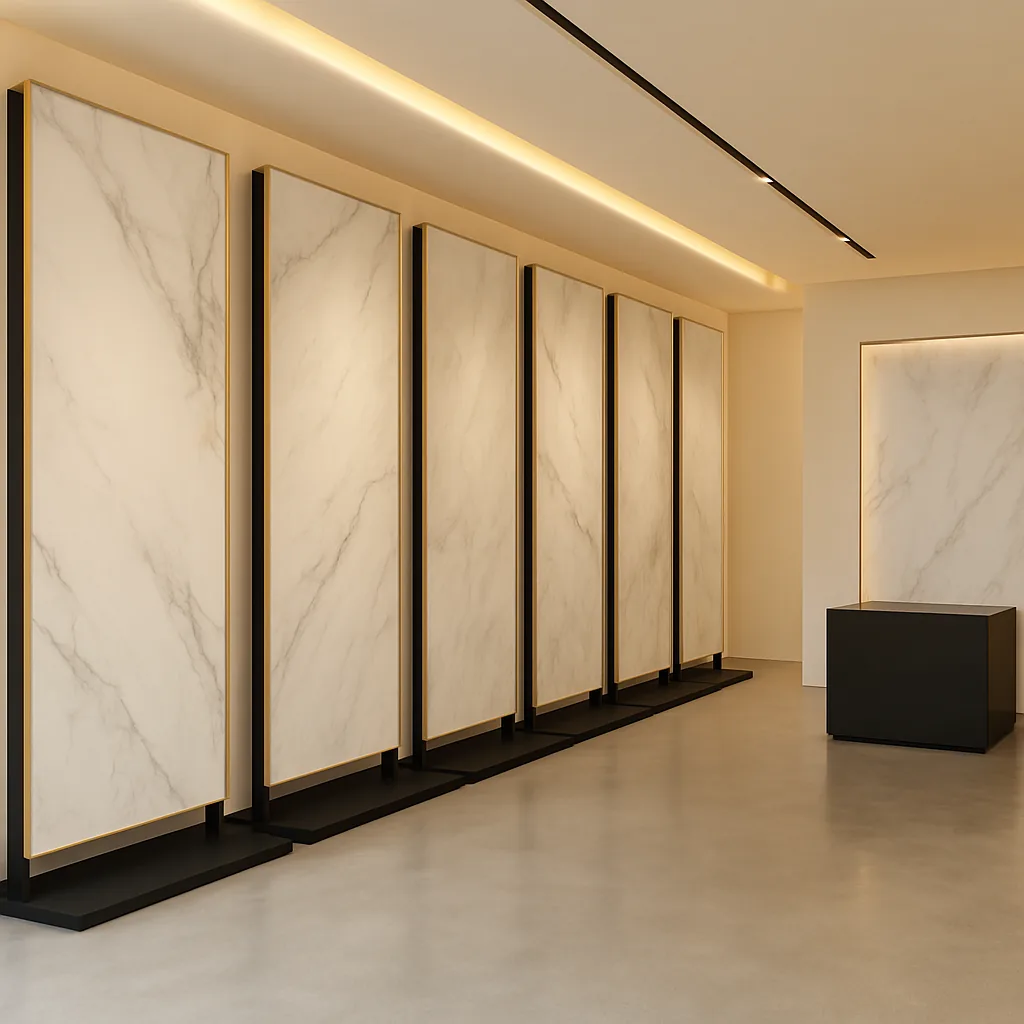
In the atelier we match the slab, thickness and veining layout to a specific kitchen project, then show the full sheet of material before it reaches the site. This makes it clear exactly how the stone pattern will close on the island and wall — before a single cut is made.